Warm, cool, clear or frosted: what each one does to an old chart
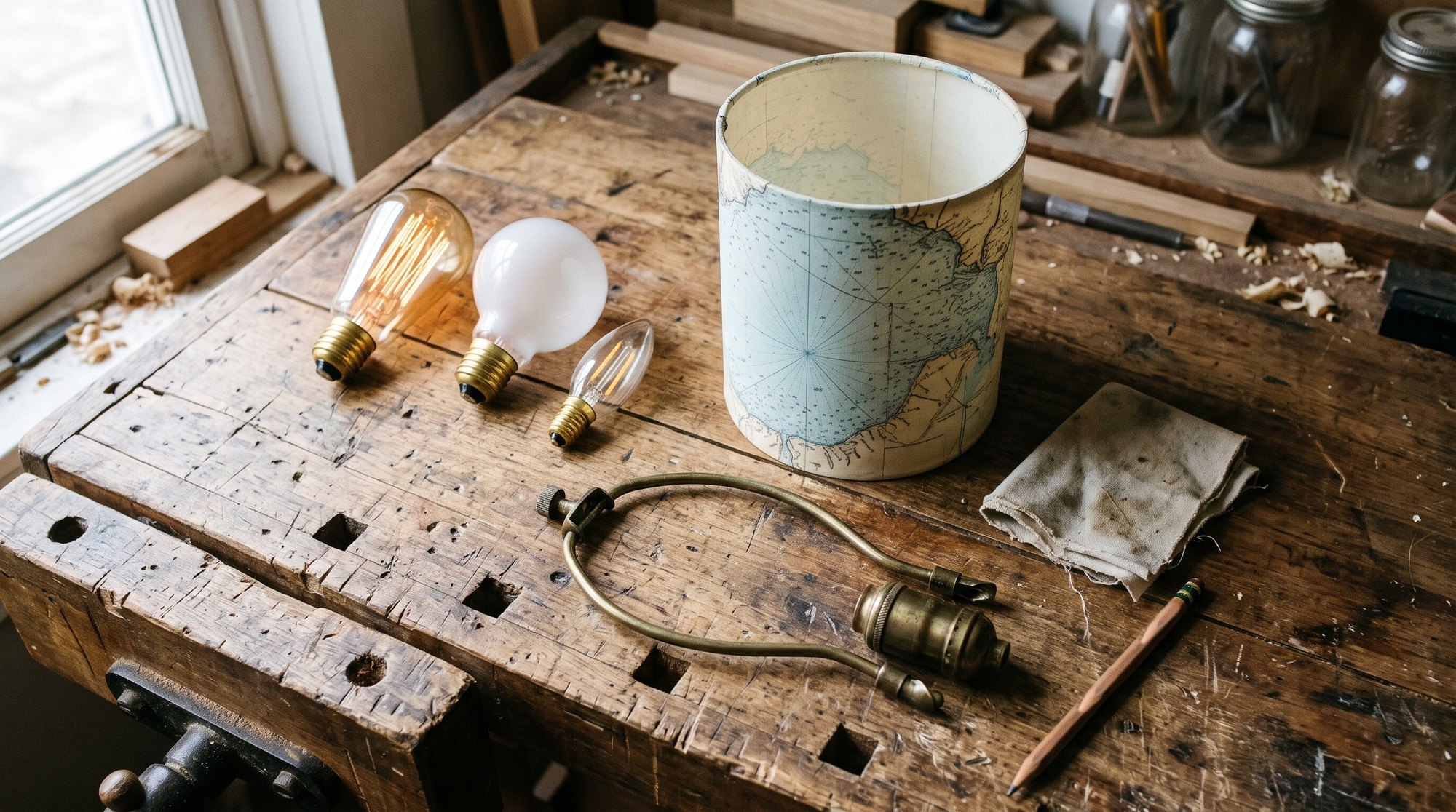
The question I get most after "how long does it take" is "what bulb should I use?" A map shade is paper, so the bulb is half the picture. Here is what I have learned from a few hundred lamps.
Warm and low, almost always
Old maps were printed on cream paper and have aged toward tea. A warm bulb, around 2700K, brings that colour forward and makes the blues of the sea look like evening water. A cool daylight bulb does the opposite: the paper goes grey and the shade looks like a photocopy. I ship every lamp with a 2700K LED and I suggest you keep to that.
Frosted for drums, clear for pendants
A frosted globe spreads the light evenly, so a drum shade glows from top to bottom with no hot spot in the middle of the Atlantic. A clear filament bulb looks lovely hanging bare, but behind a shade it can throw a bright stripe across the chart. For a pendant you look up into, clear is fine. For a table lamp you look across at, use frosted.
Keep it cool to the touch
Every shade is laminated to a fire-retardant backing, but I still only recommend LED bulbs, 60 watt equivalent or lower. They stay cool, they last for years and the paper never yellows from heat.
If you are not sure which bulb fits your lamp, send me a note through the contact page with the lamp's name and I will tell you exactly what I use.